
Wrinkled Soles Pressed on Glass, 4K
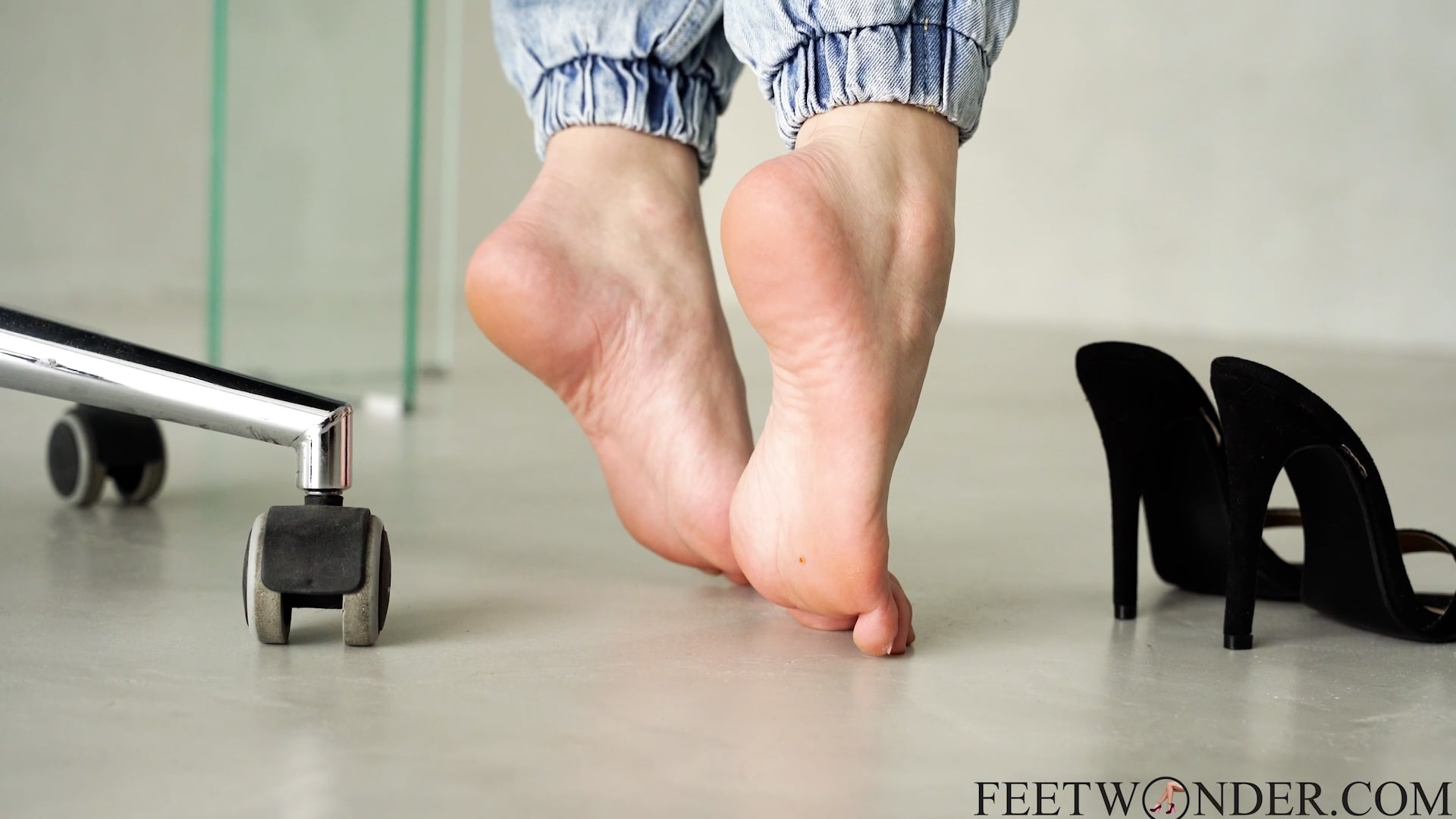
Skin on glass looks different than skin on anything else. The wrinkles flatten where pressure builds, deepen where the foot lifts, and the surface catches every change in real time.
Viola Weber sits in an office chair in a white top and denim, feet up on a glass desk – the same setting as her nylon clip, but this time there is nothing between her bare soles and the surface. Her small wrinkled soles spread under their own weight, creating a landscape of creases that shifts with every movement. You can see the pressure points – pale circles under the balls of her feet where the skin compresses hardest against the cold glass.
Read more
Action: Feet Inspector
Download:
Screenshots


Other videos

Viola Weber’s Petite Bare Soles, 4K
Release Date 21.11.2025
Duration 08:05
4k
UltraHD
Model Sofa Weber (Viola Weber)
Nail polish Pink

Action The Pose

Milf Showing Small Wrinkled Soles in an Armchair
Release Date 16.11.2025
Duration 09:54
4k
UltraHD
Model Oksana
Nail polish Red

Action Feet Inspector

Sheer Nude Pantyhose Feet Walking Outdoors, 4K
Release Date 23.11.2024
Duration 07:03
4k
UltraHD
Model Usha
Nail polish Red
Action Feet Inspector

Cute Wrinkled Soles on Red Sofa, 4K
Release Date 25.03.2023
Duration 08:48
4k
UltraHD
Model Riley
Nail polish Pink

Action Soles

Big Bare Soles with Red Toes on Kitchen Table, 4K
Release Date 28.07.2021
Duration 08.16
4k
UltraHD
Model Lynda
Nail polish Red
Action Soles

Long Toes and Big Bare Feet With Black Polish
Release Date 16.12.2020
Duration 07.49
4k
UltraHD
Model Eve
Nail polish Black

Action Cards